

Woodworm
There are various types of wood boring insects, however, the common furniture beetle (Anobium punctatum) is said to be responsible for over 80% of all woodworm damage in Ireland. The infestation usually only occurs in the sapwood of softwoods however some attacks have been found in the sapwood of native hardwoods. Tropical hardwoods are considered immune from attack.
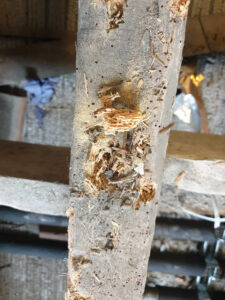
After mating the females lay their eggs (up to 60) in cracks, crevices or old flight holes. The eggs hatch out in about three weeks and new grubs, woodworm, bore into the wood where they remain boring for two years or more. The mature grub bores to within a short distance of the surface of the wood then makes a pupal chamber. The pupal stage lasts only a few weeks and then the adult beetles bore their way out leaving circular exit holes 1-2mm in diameter. In most cases, the timbers can be treated using an insecticide without the need for structural repairs. However, replacement of timbers can sometimes be required where heavy infestations have led to structural weakening of timbers in roofs, floors and stairs.
We offer a broad range of Woodworm treatment options and specialist products from industry leading experts, the Wykamol Group which include environmentally friendly preservatives.
Our services include treating timbers in-situ using surface applied preservatives, deep penetrating gels and injected boron chemicals for large section timbers.
Please contact us on (01) 288 1765 in order to discuss a specific problem and we will be pleased to advise on the most suitable method in order to answer your timber treatment needs.